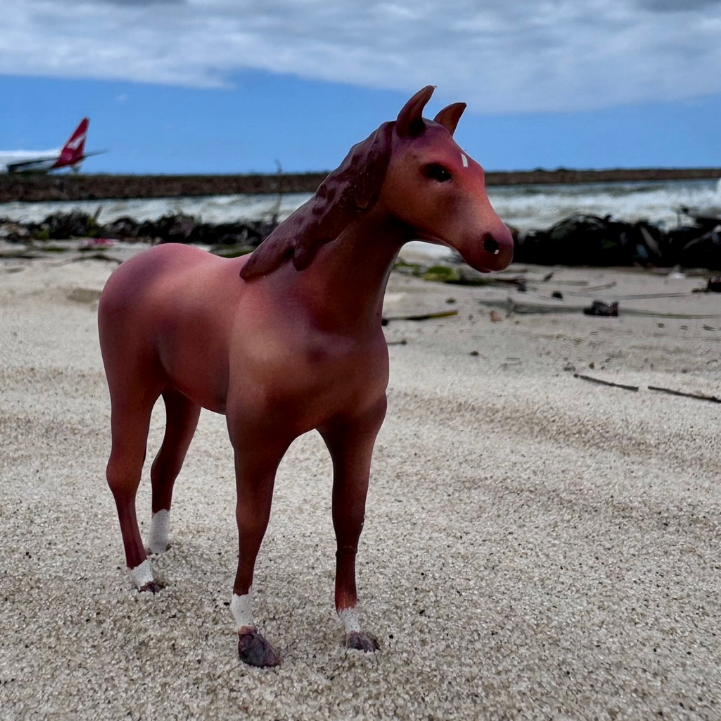
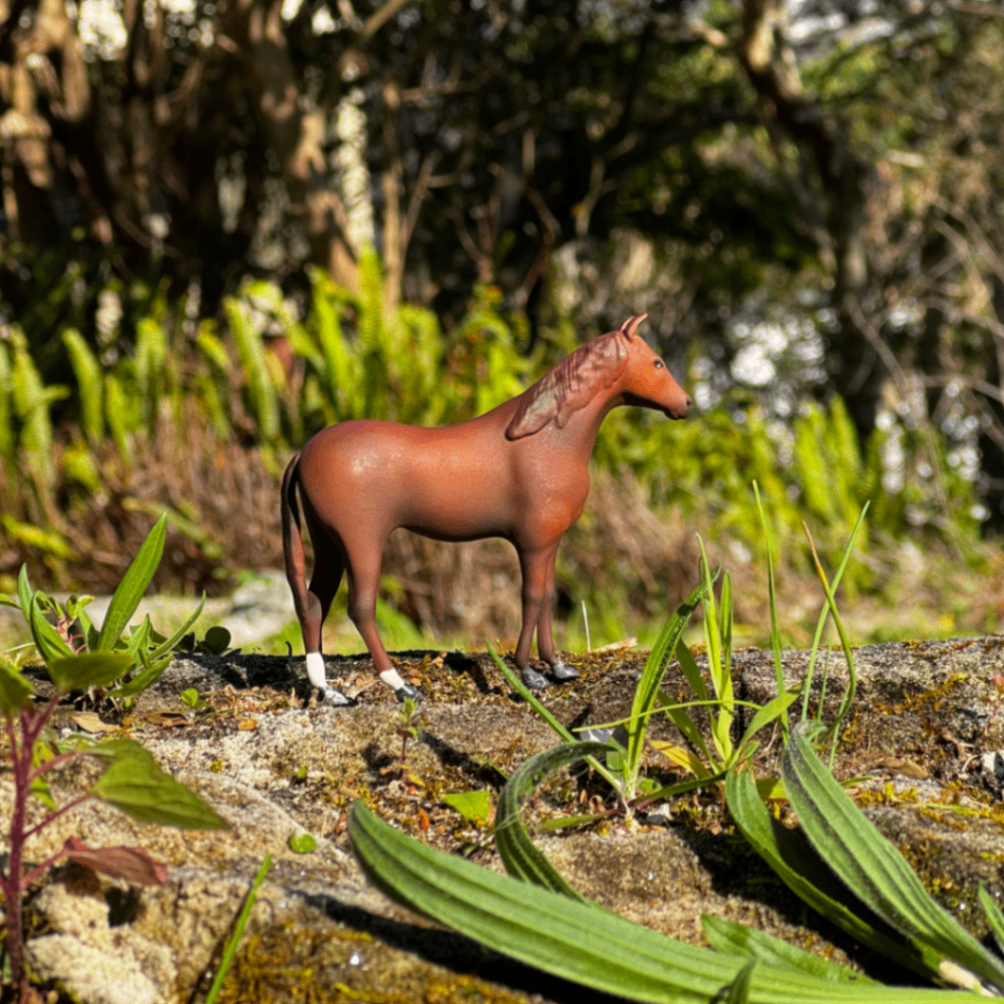
Phar Lap was bred in New Zealand by Alick F. Roberts and foaled near Timaru on 4 October 1926. He was by the imported British stallion Night Raid out of the New Zealand-bred mare Entreaty, whose sire was Winkie.
Night Raid later also sired Nightmarch, winner of the 1929 Melbourne Cup. Phar Lap was Entreaty’s second foal and was gelded before beginning his racing career.
Phar Lap was offered as Lot 41 at the 1928 Annual New Zealand Thoroughbred Yearling Sales at Trentham. Offered by his breeder, A. F. Roberts, he was purchased for 160 guineas by Hugh Telford on behalf of his brother, Sydney trainer Harry Telford, with the purchase financed by owner David J. Davis.
Phar Lap’s racing career began with little indication of what would follow. He finished last on debut at Rosehill in February 1929 and remained unplaced in his next three starts. His first victory came at his fifth attempt, in the Maiden Juvenile Handicap at Rosehill on 27 April, ridden by seventeen-year-old apprentice Jack Baker.
Following his victory in the Agua Caliente Handicap, Phar Lap was taken to a private ranch near Menlo Park, California, under the care of Tommy Woodcock. He became seriously ill and died on 5 April 1932, sixteen days after his final race.
The cause of his death remains disputed. The contemporary autopsy identified severe inflammation of the stomach and intestines, with colic, bacterial infection and arsenic poisoning subsequently proposed as possible causes. Later scientific analysis confirmed that Phar Lap had ingested a substantial quantity of arsenic shortly before his death, but did not establish whether it was administered accidentally or deliberately.
Phar Lap’s remains were preserved in three separate collections. His mounted hide has been displayed at Melbourne Museum since 1933, his skeleton is held by the Museum of New Zealand Te Papa Tongarewa in Wellington, and his 6.35-kilogram heart is held by the National Museum of Australia in Canberra.
This Hero's family is waiting to be connected.